





How can lawmakers help caregivers? Panelists outline plans
More than 1 million Wisconsinites are family caregivers, serving as the backbone of the state’s healthcare and long-term care systems.
Most are unpaid, and many have had to decrease hours at their regular job or cut back completely.
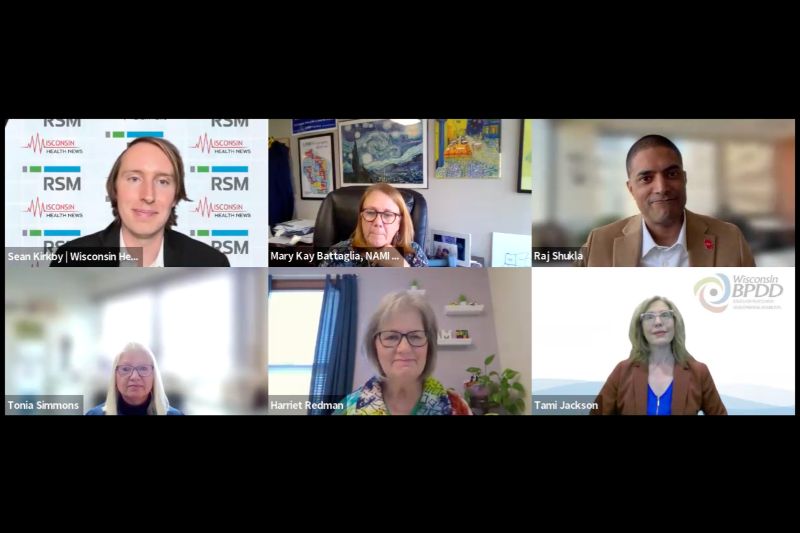
At a Wisconsin Health News virtual event this week, panelists discussed what policymakers can do to help this growing workforce.
Edited excerpts are below.
Tami Jackson, public policy analyst and legislative liaison, Wisconsin Board for People with Developmental Disabilities: Make sure that home care is in fact the priority option for people. Home care programs like Family Care, IRIS and the Children’s Long-Term Support Program, people forget that those programs, which are Medicaid waiver programs, were designed as nursing home deferral programs. They are there because they save our taxpayers in our state so much money. A lot of times family caregivers are looking at providing some of the necessary supports. Then, those programs supplement and help care for people who otherwise would be in state-run institutions, like nursing homes or (developmental disability) centers.
Folks want to be at home. They want to be in their communities. They don’t want to be set aside and set away into a place that means they don’t have the opportunity to work and make their own decisions about what to wear, what to eat or when they get care.
Mary Kay Battaglia, executive director, NAMI Wisconsin: We would like to see an improvement in the psychiatric advance directives. It’s a tool that allows a person with a mental illness to state their preferences for treatment and supports. It’s something that we in Wisconsin have a limited amount of.
We’d also really like to see, as people are being discharged from hospitals, that the families can be involved in that discharge planning, especially the caregivers.
We have peer support respite centers in our state that folks living with a mental illness can go to and take a respite from everything. It’s not a hospitalization setting. It’s not a psychiatric setting. We have three or four of them that are not funded and don’t have funding sources. One of the largest ones that we have in the state, and what I call the grandmother of them, is the Iris Place in Appleton. They’ve just lost their (Department of Health Services’) funding. They may or may not survive that cut in funding. I’m incredibly concerned because that’s a place where people go. Quite frankly, it gives the caregivers a break.
Raj Shukla, state director, AARP Wisconsin: Provide direct financial relief to those that are shouldering such a huge burden in the $11,000 a year on average that they’re spending to care for somebody. That means supporting a non-refundable family tax credit for up to $1,000 for qualified uncompensated expenses such as respite, transportation, home modifications, assistive technology and even hiring direct care workers.
We are also hoping to strengthen home and community-based care supports. That includes supporting adequate Medicaid reimbursement, protecting the long-term care minimum fee schedule and preserving federal funding for Wisconsin caregiver support programs.
We also want to protect caregivers’ access to healthcare as Wisconsin implements new Medicaid community engagement requirements. We’re advocating for effective caregiver identification. Not everybody thinks of themselves as caregivers. We’ve been in the Capitol talking to legislators who don’t consider themselves caregivers while they tell us stories about how, when they’re not in the Capitol, they are going to a parent’s house to help them mow the lawn or get their groceries. They often think of that as just a part of being in a family. In fact, they’re performing a critical service and holding together our long-term care system. So we’d advocate for effective and consistent caregiver identification, plain language outreach to those caregivers, straightforward verification of their caregiving status and safeguards against wrongful coverage loss for caregivers.
Tonia Simmons, caregiver services manager, Aging and Disability Resource Center of Portage County: It’s important also that states have enough asks so that we have things to negotiate. So if one item or topic sounds too expensive, maybe there is a lesser ask that we could consider a win. For example, last week I sat in on a caregiving at work forum through the National Housing Center, and it was based on some things that Virginia is working on … Jennifer Boysko, one of the senators, was talking about how they were looking at amending some of (the Family and Medical Leave Act) guidelines, and catering them to be specific for caregiving.
Harriet Redman, co-chairman, Financial and Workplace Security Team, Wisconsin Family and Caregiver Support Alliance: Don’t take any more (benefits) away. We, as caregivers, continue to hear this fraud message. Well, stop that. Most family caregivers are not committing fraud. We know that. Yet, every time it’s brought up as a political issue, it’s ‘all the fraud that’s going on.’ That is attacking anyone who is providing those services. It’s attacking them and their mental wellness and it’s not true.
This article first appeared in the Wisconsin Health News daily email newsletter. Sign up for your free trial here.