



Tiffany wants to invest in southeast Wisconsin veterans’ nursing home
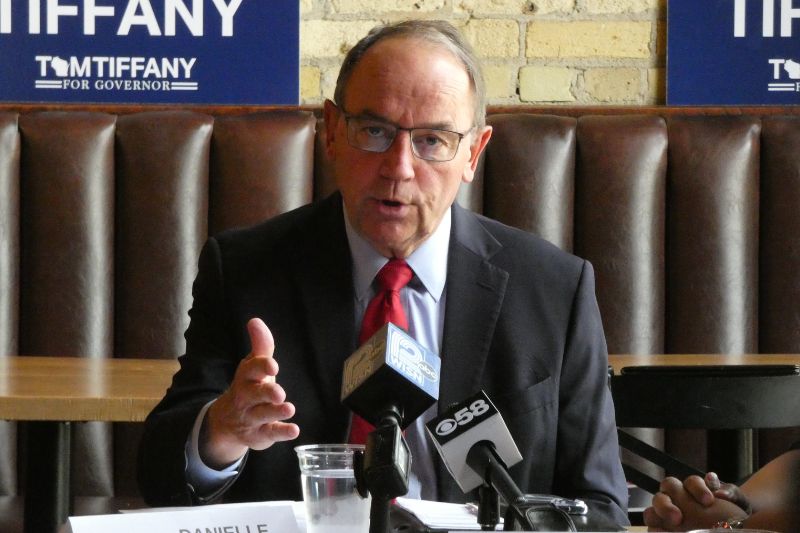
Northwoods Congressman Tom Tiffany, who’s running for governor on the Republican ticket, wants to see more investment in a state-run nursing home for veterans in southeast Wisconsin.
The state operates veterans homes in Chippewa Falls, King and Union Grove. The Chippewa Falls campus opened in 2013. Tiffany said that while serving in the state Legislature, he and other lawmakers invested in the campus at King.
The Hazelhurst Republican said it’s time to help the Union Grove facility.
“It’s clear that Union Grove is not up to snuff,” Tiffany said at a roundtable in Milwaukee last week.
He said the facility provides “substandard care.” He noted it has a one-star rating from the Centers for Medicare and Medicaid Services.
“There needs to be improvement,” he said. “It’s been ignored. I will not ignore it. We’re going to make sure that we take care of the problems.”
Wisconsin Department of Veterans Affairs spokeswoman Colleen Flaherty said the Union Grove nursing home “does not provide substandard care.”
“We acknowledge where we have fallen short and use every survey citation as an opportunity for improvement, but Union Grove provides consistent, high-quality care to veterans and veterans spouses at the home,” she said in a statement.
Flaherty said the facility has made improvements as it grapples with challenges that resulted from the COVID-19 pandemic. Those changes will take a while to show up in the CMS rating system, she said.
The changes include a new leadership team, a move away from contracted nursing staff, implementation of new training and administrative improvements. The moves have boosted the facility’s census, which has grown from 61 residents to more than 80 in the past year, a number it hasn’t seen since 2022.
CMS has a “subjective rating system” that does not always reflect care veterans receive and fluctuates based on surveys and reporting, Flaherty said. Union Grove received two stars in August 2024, three stars in November 2024 and one star in February 2025. Veterans at the facility report high satisfaction with their care, she added.
Tiffany also took questions from reporters during the event about artificial intelligence.
“Artificial intelligence itself and its regulation should be regulated by the federal government,” he said.
But, Tiffany drew a distinction between that and work pursued by the Legislative Council Study Committee on the Use of Artificial Intelligence in Health Care, which is looking at recommending legislation for the use of AI in healthcare and health insurance.
“AI in regards to healthcare is different than the overarching artificial intelligence structure that’s out there. That’s what I’m talking about,” he said. “It’s probably better to have federal oversight because you have all the interstate commerce ramifications that come with that. I mean, it’s a globalized world with our technology at this point, so I think it’s really important that, as far as the overarching structure of artificial intelligence, that there be some federal control of that, so it’s done equally between the states.”
When it comes to using AI for healthcare, “that’s a different issue,” Tiffany said. He’d be willing to look at what the Legislature proposes.
Milwaukee County Executive David Crowley, the Democratic nominee for governor, criticized Tiffany for supporting a bill that would have banned states from regulating AI for 10 years. Senators removed the provision from legislation that passed the House last year.
“AI should absolutely have the guardrails in place to prevent destruction as any other tool does, and we should create stronger protections for privacy, security, transparency and accountability in our state,” Crowley said.
Crowley said that AI should be seen as a tool in healthcare, “not a substitute for healthcare providers or insurers.”
This article first appeared in the Wisconsin Health News daily email newsletter. Sign up for your free trial here.